
High End Residential Entrances Move Toward Project Based Customization
September 27, 2026
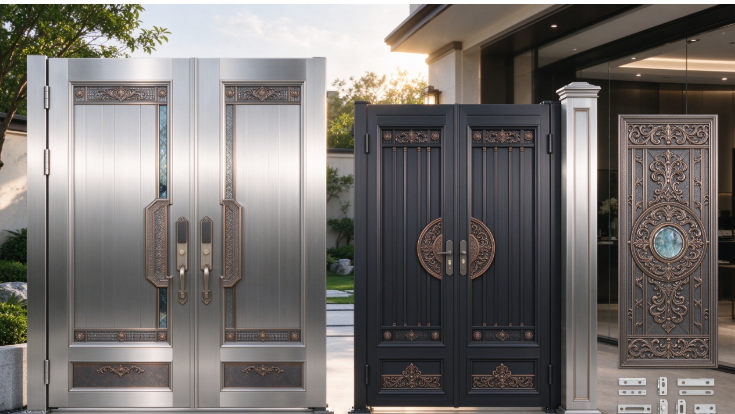
Custom Stainless Steel Villa Doors are becoming part of a wider move toward project-specific residential entrances. Architects and developers increasingly expect the door to coordinate with facade materials, access technology, opening dimensions and the identity of a property rather than arrive as an isolated catalog item. This does not mean every entrance needs excessive ornament. It means performance and appearance are decided through a controlled brief.
The shift is visible across contemporary villas, heritage-inspired residences and multi-unit luxury developments. Larger openings, smart access, mixed materials and regionally adapted aesthetics are changing how entrance packages are purchased. For manufacturers such as Kepon Doors, the important industry question is how to preserve customization while keeping engineering, sample approval and production repeatable.
Residential Entrance Market Signals
• Architecture Is Replacing the Standard Door Schedule
• Regional Design Language Is Driving More Product Variants
• Smart Access Is Changing the Entrance Design Sequence
• Material Selection Is Becoming a Lifecycle Discussion
• Compare the Forces Reshaping Villa Entrance Procurement
• Finish Approval Is Moving From Screens to Physical Samples
• Installation Interfaces Are Becoming a Purchasing Metric
• OEM and ODM Programs Need Stronger Configuration Control
• Sustainability Claims Are Shifting Toward Verifiable Design Choices
• Market Questions About Customized Villa Entrances
Architecture Is Replacing the Standard Door Schedule
A standard schedule can identify width, height and fire or acoustic requirements, but high-end residential projects often need more context. The main entrance may align with facade joints, a double-height hall, a courtyard axis or a specific stone module. When the door is developed late, installers are forced to solve threshold, cladding and hardware conflicts on site. Earlier coordination turns the entrance into part of the building envelope strategy.
Digital drawings make this coordination faster, yet they do not remove the need for verified site dimensions. Models can show proportions and interfaces, while surveys confirm the built opening and floor levels. The industry is moving toward a combined workflow: architectural intent establishes the composition, and controlled field information releases the manufactured size.
Regional Design Language Is Driving More Product Variants
Luxury housing is not a single visual market. Some regions favor restrained metal planes and deep shadow gaps; others prefer fan motifs, copper tones, arched glazing, timber-like textures or formal symmetry. A manufacturer serving several markets must translate these preferences into repeatable panel, finish and hardware options without assuming that one popular style will transfer everywhere.
This makes modular engineering useful. Common structural principles can support different visible compositions, while project-specific drawings control proportion and detail. Kepon Doors' product range spans stainless steel, zinc alloy, copper-clad, cast aluminum, aluminum art and full-cladding groups, reflecting the need to serve different facade languages from one manufacturing base.
Smart Access Is Changing the Entrance Design Sequence
Electronic locks, keypads, readers and remote-release functions are no longer treated only as accessories. They can affect stile dimensions, wiring routes, power supplies and emergency behavior. Residential designers are therefore bringing access-control decisions forward. A lock chosen after the panel is complete can compromise appearance or require uncontrolled modifications.
Technology also introduces lifecycle questions. Batteries, cables, software support and replacement components may outlast different parts of the renovation cycle. Owners need a manual fallback and a clear service route. Door manufacturers, hardware suppliers, installers and system integrators must define their boundaries so that a visually complete entrance is also maintainable.
Material Selection Is Becoming a Lifecycle Discussion
Buyers are comparing corrosion behavior, repairability, surface aging, weight and cleaning rather than choosing only by initial appearance. Stainless steel can support durable exterior skins when grade, finish and fabrication suit the exposure. Coated steel, aluminum-clad and copper-faced constructions offer different aesthetics and maintenance profiles. No material is automatically best for every climate, opening size and budget.
Lifecycle thinking also includes replaceable hardware, glass access and finish care. A door that can be adjusted and serviced may retain its function longer than a visually complex unit with inaccessible components. Project teams increasingly request material schedules and maintenance guidance during procurement, not after handover.
Compare the Forces Reshaping Villa Entrance Procurement
The following table separates several trends that are often combined under the broad term luxury customization. Each trend changes a different part of the specification and approval process.
Market signal | Buyer expectation | Project risk | Required response |
Larger openings | Stronger visual impact and clear passage | Leaf weight and alignment problems | Early structure and hardware review |
Regional aesthetics | Facade-specific motifs and finishes | Generic design feels disconnected | Controlled drawings and finish samples |
Smart access | Integrated entry and user management | Late cutouts or incompatible wiring | Hardware selection before production |
Development programs | Consistent entrances across several villas | Revision and color variation | Sample approval and configuration control |
Lifecycle focus | Serviceable and maintainable products | Hidden replacement and cleaning costs | Accessible hardware and care information |
Finish Approval Is Moving From Screens to Physical Samples
Rendered images help clients compare concepts, but screens cannot reliably represent metallic reflection, texture or sheen. Brushed copper, antique bronze, graphite, gunmetal and wood-grain effects change under daylight and artificial lighting. The industry is therefore retaining physical sample approval even as design communication becomes more digital.
A strong sample process records the reference and its application. Flat sample panels may not show how a finish behaves on edges, welds or deep relief. For larger programs, buyers may approve a representative door section or first unit before releasing the balance. This creates a shared visual standard and reduces subjective disputes at delivery.
Installation Interfaces Are Becoming a Purchasing Metric
Manufacturing quality can be undermined by an opening that is out of square, an unsupported frame or incomplete waterproofing. Developers are paying more attention to who verifies the opening, provides anchors, seals the perimeter, protects finishes and performs final adjustment. These responsibilities should appear in the scope instead of being left to assumptions between the factory and site contractor.
Transport and access must also be considered for oversized entrances. Crate dimensions, lifting points, route restrictions and the sequence of facade completion can influence whether a unit arrives assembled or in controlled modules. A lower factory price does not compensate for a package that cannot move through the site or be installed safely.
OEM and ODM Programs Need Stronger Configuration Control
Distributors and development partners often want private-label ranges or exclusive visual combinations. The commercial opportunity is significant, but variant growth creates risk. Similar panels may require different locks, finishes, opening directions or local labels. Each combination needs a stable code and released drawing so production does not rely on informal descriptions.
Effective programs distinguish platform elements from project options. Shared frames, core principles and process controls can support volume, while visible panels, finishes and hardware create market differentiation. Kepon Doors supports OEM and ODM manufacturing, and its 15,000 sqm base keeps cutting, finishing and assembly under one roof to coordinate these stages.
Sustainability Claims Are Shifting Toward Verifiable Design Choices
Metal doors are sometimes promoted using broad sustainability language, but responsible procurement requires more specific questions. Buyers can ask about material identification, service life, repair access, replaceable hardware, packaging and end-of-life separation. Worldsteel provides lifecycle datasets that recognize both production impacts and recycling benefits, illustrating why material claims should be evaluated across a defined boundary.
Long service can be a meaningful advantage when the entrance remains functional, maintainable and visually acceptable. It is not guaranteed by material name alone. Exposure, detailing, cleaning, hardware support and installation all matter. The industry is moving toward documented decisions rather than assuming that a premium finish automatically produces a low-impact result.
Market Questions About Customized Villa Entrances
Why are more villa entrances being manufactured to order?
Projects increasingly require nonstandard openings, facade-specific proportions, regional finishes, smart access and coordinated hardware that catalog products may not resolve.
Are digital renderings enough to approve a metallic finish?
No. Renderings support concept review, but a controlled physical sample is more reliable for texture, sheen, color and behavior under actual light.
What makes an OEM door program difficult to manage?
Multiple dimensions, finishes, locks, handing options and labels can create configuration errors unless every variant has a stable code and released specification.
How can buyers evaluate lifecycle value?
Review exposure suitability, finish care, adjustment, replaceable hardware, glass access, documentation, packaging and the expected service route, not only purchase price.
Architects, distributors and developers planning a customized entrance program can share their market style, opening range, finish references and hardware strategy with Kepon Doors. A structured brief helps determine which elements can be standardized and which should remain project-specific.
Residential Entrance Industry Metadata
Meta Title: Customization Trends in High End Residential Entrances
Meta Description: Explore how architecture, smart access, material lifecycle, sample approval and OEM controls are changing high-end villa entrance procurement.
Meta Keywords: Custom Stainless Steel Villa Doors, villa entrance trends, residential entrance customization, OEM villa doors